Emerald ash borer found in several new locations in northern Willamette Valley

June 25, 2026

(TUALATIN, Ore.) – The tree-killing emerald ash borer (EAB) pest has been confirmed in at least three new Willamette Valley communities this month –in a shopping center parking lot just east of I-5 in Tualatin, in a parking lot right outside Newberg, and at a private residence in Silverton.

The new detections are within the existing EAB quarantine zone covering the five counties where this pest has been found so far. Counties within the quarantined zone are Clackamas, Marion, Multnomah, Washington and Yamhill. By order of the Oregon Department of Agriculture, tree material from ash, olive, and white fringetree must remain within quarantined counties, along with firewood from any hardwood tree.

Oregon Department of Forestry EAB Support Specialist Matt Mills said, “we have long known that EAB would spread from infested sites to nearby areas, so these new detections are not unexpected. Experience from other states shows that four to five years or so after first being detected EAB spreads from pockets of infested ash trees and becomes much more widespread over an entire county or metropolitan area.”

All three reports were made by private individuals who recognized ash trees that were showing signs of EAB infestation and knew to report them on the invasive species hotline at https://oregoninvasiveshotline.org.

Kat Bethea, also an EAB Support Specialist with the Oregon Department of Forestry, said this shows the success of four years of outreach to the public in northwest Oregon with information about EAB and what to expect and where to report sightings.

“We are thankful that people are paying attention to the health of ash trees around them and letting us know when signs point to a possible EAB infestation,” Bethea said.

Bethea added that ODF has sent messages to officials in the affected towns and those in surrounding communities to let them know to keep a close eye on ash trees in their community for signs of EAB.

What the public can do

“This is a good time to identify any ash trees on your property. Decide which ones if any you want to keep and contact a licensed pesticide applicator to begin protective treatment with a systemically injected insecticide,” said Bethea.

Mills said if homeowners plan to remove ash trees already in poor condition, then they should wait until mid-October when adult EAB beetles are no longer flying. “Pre-emptive removal of such trees will allow them to replant with trees that aren’t vulnerable,” he said. “This will start restoring tree canopy and also spreads out the cost of removals. Simply waiting for EAB to start killing trees in your town can become overwhelming in a short period of time and costly.”

Mills said ash trees quickly become brittle and hazardous to climb or work under once they are killed.

“Removal of a dead or rapidly dying ash tree is more dangerous and costly than when it is still alive. That’s why in newly infested areas or areas nearby it’s a best practice to pre-emptively remove any ash trees that are along streets or in parks or yards, and which are in poor condition or planted in the wrong place,” he said.

Mills added that although EAB is spreading naturally through the northern Willamette Valley, people moving firewood more than 10 to 15 miles from an EAB-infested tree risk taking the pest into distant, uninfested areas. “Firewood being moved is a known way EAB is able to travel farther and spread faster than it could on its own. That is why the Oregon Department of Agriculture doesn’t allow hardwood firewood to be moved from quarantined zones.”

For more information on how to identify ash trees or EAB, what the signs of infestation are, and what can be done in response to an infestation, please visit www.OregonEAB.com.

Newberg

The pest was first reported in Yamhill County only two years ago. At that time, a single beetle was found on the county’s northern border with Washington County. This June the Oregon Department of Agriculture’s Max Ragozzino investigated a report called in to the Oregon Invasive Species Hotline. Ragozzino found two trees in a parking lot were heavily infested with EAB. Six others appear to be only lightly infested so far.

Tualatin

After a report came to the hotline about ash trees in a commercial parking lot near I-5 with telltale signs of EAB, ODF was able to visit and confirm that a number of the trees were infested with EAB. The location is especially concerning because it is only about a mile from the Tualatin River, whose banks are shaded by large numbers of Oregon ash.

City of Tualatin Parks Maintenance Manager Tom Steiger states that the city has been following the movement of the emerald ash borer, conducting tests within the city, and learning about treatment and mitigation measures. Additionally, the city has an inventory of where ash trees are located as street trees, and has funding budgeted for a survey along the banks of the Tualatin River and other natural areas, which can help inform next steps in the approach to management and replacement of ash trees within the city.

Silverton

A private pesticide applicator coming to treat an ash tree in a residential neighborhood on the north side of town reported signs of EAB in the tree, which ODF later confirmed. A second report has since come in as well, Mills said.
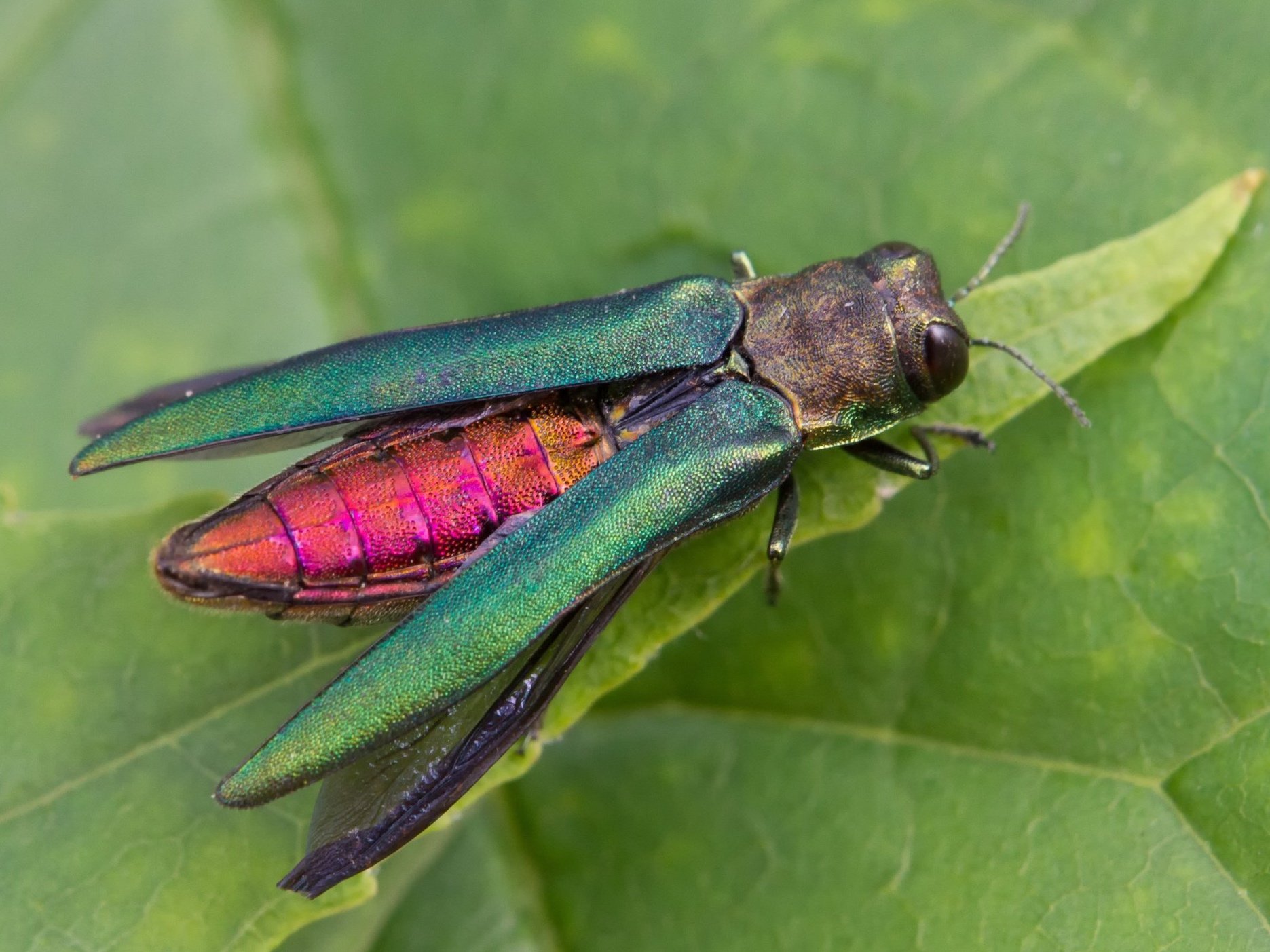
Emerald Ash Borer (adult)

Single invasive quagga mussel found on shoreline of Prineville Reservoir; No other evidence of quaggas found, intensive monitoring continues

June 23, 2026

Media Contact: Adam Baylor, 503-930-7116, Adam.C.Baylor@ODFW.Oregon.gov

PRINEVILLE, Ore. – A single dead adult quagga mussel was found out of water on the shoreline at Prineville Reservoir on June 6 during a routine survey for aquatic invasive species. This marks the first time that this highly invasive freshwater mussel species has been found in or near an Oregon waterbody.

Only the single quagga mussel was found. Additional intensive surveys by Portland State University (PSU) Center for Lakes and Reservoirs did not find any other mussels along the shoreline at Prineville Reservoir. Test results from water samples and environmental DNA (eDNA) tests by PSU that came back late last week also showed no sign of invasive mussels. It is unknown at this time how the quagga mussel ended up on the shore of the reservoir.

On June 6, PSU crews were conducting surveys at Prineville Reservoir and nearby waterbodies as part of their regular aquatic invasive species surveillance work around the state. On that day, surveyors located the single dead adult quagga mussel (Dreissena bugensis) on shore in sand about one meter above the waterline. They collected it and contacted ODFW, Oregon State Marine Board (OSMB) and the Oregon Invasive Species Council per established protocols.

Since the June 6 detection, ODFW and OSMB, together with federal, state and local partners, have been working under the Oregon Invasive Freshwater Mussel Rapid Response Plan. They have formed a Unified Command to coordinate continued surveillance, sampling and outreach efforts to boaters in Central Oregon and around the state.

This discovery is a serious environmental and economic concern for Oregon and the Pacific Northwest. Invasive quagga mussels are small non-native freshwater mollusks that have caused major problems in the United States since their introduction in the 1980s. They can reproduce extremely quickly and can seriously damage Oregon's waterways. They attach to any hard surface to colonize, clog water intake systems, outcompete native species, and disrupt recreation and aquatic habitats and infrastructure.

"We are taking this finding extremely seriously, but also cautiously as we work to confirm what we're seeing at Prineville Reservoir. We are coordinating closely with our state, federal, tribal, and local partners, and preparing to move quickly based on the evidence we find," said Keith DeHart, ODFW Aquatic Invasive Species Coordinator. "Our top priority is protecting Oregon's waters while making sure every action we take is grounded in the best available information."

During surveys by PSU crews conducted in late May and early June 2026 at Prineville Reservoir, technicians completed six dock inspections covering 182 meters and surveyed 22 shorelines totaling nearly 1,500 meters. They also performed 57 mussel larva (veliger) tows—53 boat-based and four stationary near the dam—filtering more than 296,000 liters of water overall. All surveys and laboratory results from the water samples as well as Environmental DNA (eDNA) samples were negative for invasive mussels.

On June 18, ODFW staff completed inspections of two floating restrooms and their associated buoys as well as two moored vessels on Prineville Reservoir with all checks following standard invasive species protocols. No invasive freshwater mussels were detected on any structures or vessels during the survey.

Monitoring teams will continue routine intensive sampling efforts moving forward to ensure early detection and subsequent rapid response if quagga mussels are present.

Clean, Drain, Dry
Recreational boats are known to be a major source of freshwater invasive mussel spread in the United States. Inspections have intercepted boats fouled by live invasive mussels prior to launching in Northwest waters a number of times in recent years. In April, ODFW staff at the Ashland Boat Inspection Station found golden mussels on a watercraft headed from the Sacramento River Delta to Oregon and were able to decontaminate the boat before it reached an Oregon waterbody.

To prevent potential dispersal of freshwater invasive mussels, boaters should: CLEAN all boats, trailers, and other equipment after leaving a lake or stream. DRAIN all water from vessels and allow them to DRY before launching into another waterbody.

Boaters are also reminded that they are required to stop at check stations for inspection. Check stations are currently located in Brookings, Ashland, Klamath Falls, Ontario and Umatilla. A roving check station will also be at boat ramps around Prineville Reservoir and central Oregon periodically in coming weeks to inspect watercraft for invasives.

Check stations and other invasive species surveillance are funded by proceeds generated by the Aquatic Invasive Species Permit and Waterway Access Permits.

ODFW and partners will continue to monitor the situation at Prineville Reservoir and regional waterbodies, allocating additional resources as needed. Expanded water and shoreline surveys are being conducted to facilitate early detection and rapid response to any signs of invasive mussels.

Public outreach including watercraft inspections is increasing. Inspections along with education materials and signage are intended to reinforce the Clean, Drain, Dry protocol with Oregon boaters.

"Continued vigilance and cooperation from the public are vital to protecting Oregon's waters and keeping recreation areas open," said DeHart.

There are no plans to close Prineville Reservoir at this time, as all structures and vessels inspected showed no visible mussels or signs of invasive freshwater species.

While it remains unlikely that reservoir users will encounter mussels, the public is encouraged to report any suspicious sightings to the Oregon Invasive Species Hotline at 1‑866‑INVADER or online at https://oregoninvasiveshotline.org to support ongoing monitoring and early detection efforts.

Invasive golden mussels intercepted on incoming watercraft at Ashland inspection station

SALEM, Ore. – ODFW staff at the Ashland Boat Inspection Station found golden mussels on a watercraft that was being transported to a new owner from the Sacramento River Delta to Oregon on April 4. The watercraft was decontaminated at the inspection station and all golden mussels attached to the boat were properly disposed.

This is the first detection of adult golden mussels being transported into Oregon. Golden mussels were detected for the first time in North America in 2024 and the threat to Oregon is very serious.

Golden mussels are similar to zebra or quagga mussels, but they can establish in a much wider range of temperatures and can tolerate some water salinity. They feed heavily on microscopic aquatic plants and animals that are essential food sources for native species and sport fish.

Invasive freshwater mussels can damage water infrastructure, such as irrigation and hydropower systems, and also degrade water quality and limit recreational activities such as fishing and boating.

"Early detection like this shows how critical watercraft inspections are to protecting our fisheries, infrastructure, and agriculture," said ODFW Invasive Species Coordinator Keith DeHart. "We are grateful for the boat owner's cooperation throughout the inspection and decontamination process. Their willingness to follow regulations and assist staff played an important role in helping prevent the potential spread of invasive mussels into Oregon's waters."

It is the law in Oregon that any vehicle transporting a watercraft is required to stop at any open watercraft inspection stations for aquatic invasive species inspections.

Watercraft owners should be aware of where inspections stations are located around Oregon. Stations are open if orange, "Boat Inspection Ahead," signs are posted, followed by "Inspection Required for All Watercraft."

Visit MyODFW.com for more information about the Aquatic Invasive Species Prevention Program and Waterway Access permits.

ODFW, in partnership with the Center for Lakes and Reservoirs at Portland State University, has not detected invasive freshwater mussels in any of Oregon's waterways thanks to responsible boaters and inspection station crews. However, Oregon is still at risk of an invasion. In 2025 crews decontaminated 12 watercraft carrying invasive freshwater mussels and intercepted an additional 295 watercraft for other types of aquatic biofouling such as Eurasian Watermilfoil.

Since the start of the Watercraft Inspection Stations program in 2010, ODFW has inspected 246,748 watercraft and intercepted 185 watercraft with invasive freshwater mussels and 3,758 watercraft with other types of aquatic biofouling.

Last month, quagga mussels were found on a watercraft entering Oregon, the first confirmed instance in 2026 of invasive freshwater mussels being detected on a boat entering the state.

Inspection station locations and operating hours:

Ashland: I-5 at the Ashland Port of Entry. Open daily, year-round, during daylight hours.

Ontario: I-84 at the Ontario Rest Area. Open daily, year-round, during daylight hours.

Seasonal inspection stations located in Brookings, Klamath Falls, Umatilla, and at Owyhee Reservoir will be opening the first week of May. ODFW will also have roving inspection crews working boat ramps and other access points around the state this year.

If you find invasive freshwater mussels on a vessel, please help protect Oregon and report them to the Oregon Invasive Species hotline by calling 1-866-INVADER or visiting https://oregoninvasiveshotline.org.

Photos:

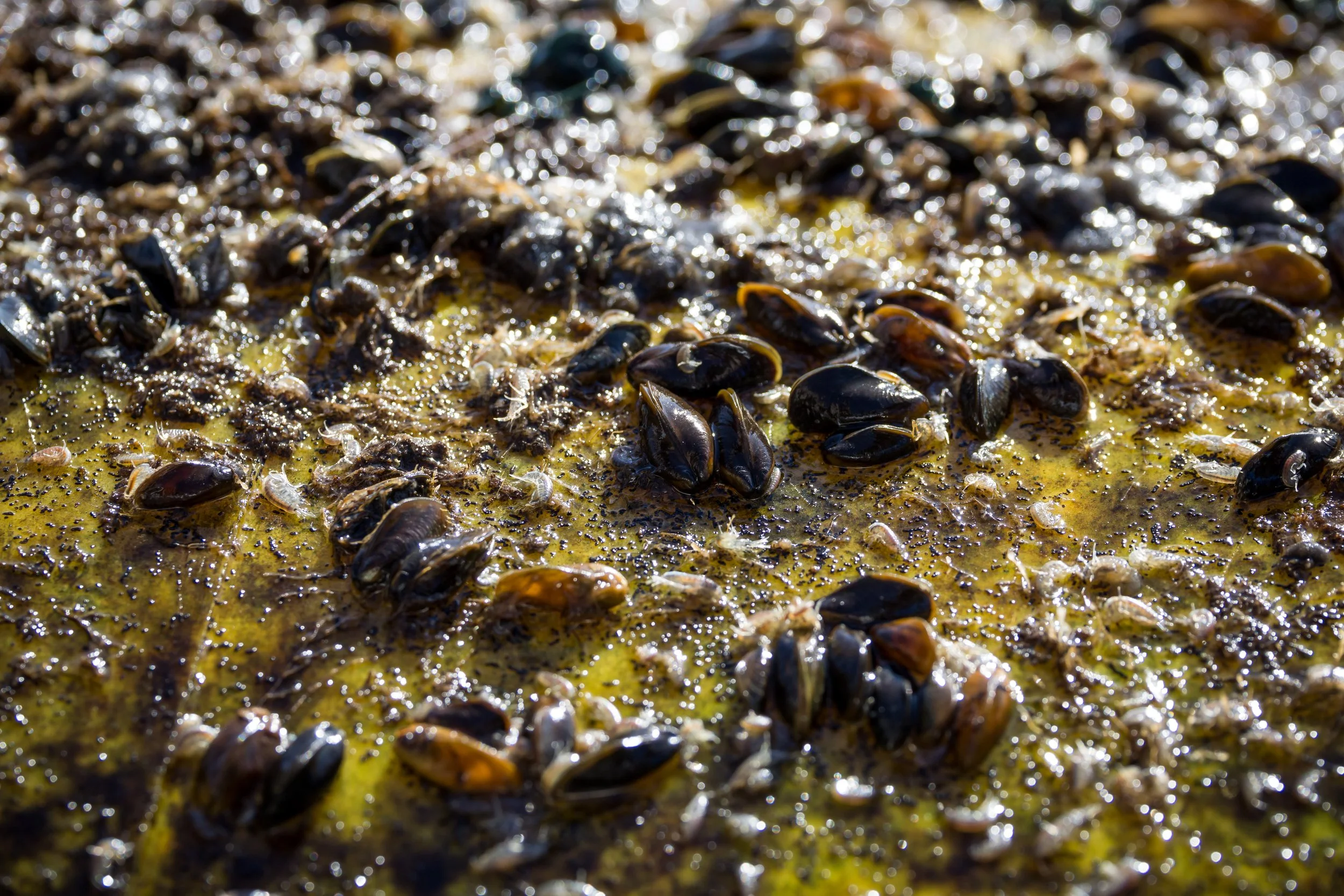
Invasive golden mussels were found on a watercraft being transported into Oregon from the Sacramento River Delta on April 4, 2026. ODFW photo.

Invasive golden mussels removed from a watercraft that was transported into Oregon from the Sacramento River Delta on April 4, 2026. ODFW photo.

Invasive golden mussels were found on a watercraft that was transported into Oregon from the Sacramento River Delta on April 4, 2026. ODFW photo.

close up of golden mussels attached to a buoy

Potentially invasive Cuban treefrogs found in plants shipped to Oregon

Oregon Dept. of Fish & Wildlife

Oregon Dept. of Fish & Wildlife

Two non-native and potentially invasive Cuban treefrogs (Osteopilus septentrionalis) were found late last month hitchhiking on nursery plants sold at one location in Oregon and another purchased online. The Oregon Department of Fish & Wildlife (ODFW) advises that nursery plant retailers and customers inspect all products. 

Do not release any found animals into the wild and report them immediately to the Oregon Invasive Species Hotline at 1-866-468-2337 or online at: https://oregoninvasiveshotline.org/reports/create.